

Introduction
Technology has changed the financial world in ways that were difficult to imagine only a few decades ago. Trading, which once depended heavily on telephone communication, physical records, manual calculations, and delayed market information, has gradually become a highly digital activity. Today, traders and financial professionals can access market information, analyze large datasets, monitor price movements, and manage transactions through sophisticated digital systems. This transformation has created a stronger connection between finance and technology, making technological knowledge increasingly important for understanding modern markets.
The concept of ftasiatrading technology can be explored within this broader transformation. Online discussions around the term commonly connect it with digital trading tools, data analytics, automation, artificial intelligence, cloud computing, and cybersecurity. Rather than thinking of trading technology as a single application, it is more useful to view it as an ecosystem of connected systems that help users collect information, analyze market conditions, manage workflows, and interact with financial platforms. As technology continues to develop, these capabilities are expected to become more sophisticated while placing greater importance on security, reliability, and responsible use.
Understanding FTAsiaTrading Technology
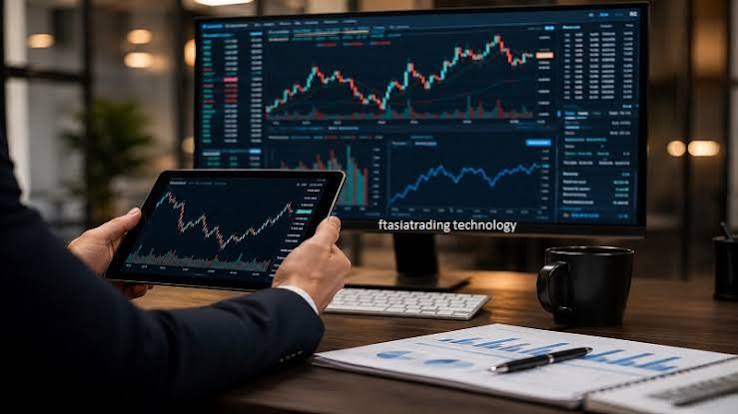
Ftasiatrading technology represents a useful topic for examining how digital innovation is influencing trading and financial activities. Modern trading environments depend on numerous technological components working together. Market-data systems collect information, analytical platforms process it, digital interfaces display it, and automated tools can perform predefined actions based on specific conditions. Cloud infrastructure can provide scalable computing resources, while cybersecurity technologies help protect accounts, systems, and sensitive information.
The major advantage of technological development is not simply speed. A modern system can help organize complicated information into a format that is easier to interpret. Instead of manually reviewing thousands of individual data points, users can rely on dashboards, charts, alerts, analytical models, and reporting tools to understand important developments. However, technology does not eliminate uncertainty from financial markets. Prices can change unexpectedly, data can contain limitations, and automated systems can behave differently from expectations when market conditions change. For that reason, technology works most effectively when combined with careful research and responsible decision-making.
The Evolution of Digital Trading
Traditional financial trading required considerable human involvement at almost every stage. Market participants depended on brokers, newspapers, telephone communication, physical documentation, and manual calculations. Information could take time to reach investors, while completing certain transactions involved several operational steps. The arrival of internet-based financial platforms significantly changed this environment by allowing users to access information and interact with markets through computers and, later, smartphones.
The next stage involved increasingly sophisticated software. Trading platforms began incorporating technical indicators, charting systems, real-time alerts, automated execution, portfolio monitoring, and analytical dashboards. These features made financial information more accessible and reduced the amount of repetitive manual work required for many activities. Current developments increasingly involve artificial intelligence, machine learning, cloud computing, and advanced analytics. These technologies can process large datasets and identify patterns that would be difficult to evaluate manually. The evolution demonstrates that trading technology is not a single innovation but a continuing process shaped by improvements in computing, connectivity, software, and data management.
The Role of Artificial Intelligence
Artificial intelligence has become one of the most discussed technologies in modern financial systems. AI can process large amounts of information, recognize patterns, categorize data, and support analytical workflows. In trading-related environments, these capabilities can potentially help users examine historical information, monitor market developments, generate alerts, or organize research.
Machine-learning systems can also be trained using historical datasets to identify relationships within information. However, identifying a historical pattern does not guarantee that the same pattern will appear in the future. Financial markets are affected by economic conditions, company developments, investor behavior, geopolitical events, interest rates, and many other factors. Consequently, AI-generated analysis should be treated as a supporting resource rather than an automatic guarantee of successful outcomes.
For ftasiatrading technology, AI is therefore best understood as one component of a wider technology ecosystem. Its value depends on data quality, model design, appropriate testing, transparency, and the way users interpret its output.
Data Analytics and Market Intelligence
Data has become one of the most important resources in modern financial technology. Markets produce enormous quantities of information, including prices, trading volumes, economic announcements, company reports, historical records, and sentiment indicators. Processing such information manually can be difficult, particularly when users need to compare multiple variables simultaneously.
Advanced analytics tools help transform raw information into useful visual and numerical representations. Charts, dashboards, trend indicators, statistical calculations, and customized reports can make complicated datasets easier to examine. Real-time analytics can also allow users to monitor changing conditions rather than depending exclusively on information collected hours or days earlier.
Good analytics, however, depends on good data. Incomplete, inaccurate, outdated, or poorly interpreted information can produce misleading conclusions. This makes data validation an important part of any technology-driven financial workflow. Users should understand where information originates, how frequently it is updated, and what limitations may affect its interpretation.
Automation and Algorithmic Trading
Automation is another important part of modern trading technology. Automated systems can execute predefined instructions without requiring a user to manually perform every repetitive action. This can improve operational efficiency and reduce some forms of manual error. Algorithmic trading systems may use predetermined rules involving price levels, indicators, timing, volume, or other conditions.
The development of automation has also increased the importance of testing and monitoring. A strategy that performs appropriately under one set of market conditions may behave differently during periods of high volatility or unusual liquidity. Poorly designed automated instructions can therefore create unexpected outcomes. Proper testing, clear parameters, monitoring, and risk controls are essential when automation is used.
The broader significance of ftasiatrading technology can be seen through this combination of automation and human oversight. Technology can handle repetitive processes efficiently, while people remain responsible for establishing objectives, evaluating assumptions, and reviewing performance.
Cloud Computing and Digital Infrastructure
Cloud computing has transformed the way many technology systems are developed and operated. Instead of depending exclusively on physical infrastructure located at a single site, cloud-based services can provide computing resources, storage, networking, and software capabilities through flexible digital infrastructure.
For financial technology, cloud computing can support scalability and accessibility. Systems may need to process large amounts of information while serving users across different locations and devices. Cloud infrastructure can help organizations manage these requirements more efficiently when it is properly designed and secured.
Reliability remains an important consideration. Financial applications require stable infrastructure because technical interruptions can interfere with access to information and digital services. Backup systems, monitoring, redundancy, disaster recovery, and appropriate access controls are therefore important components of modern financial technology.
Cybersecurity in Digital Trading
As trading becomes increasingly digital, cybersecurity becomes equally important. Financial accounts and trading systems can contain sensitive information, making them potential targets for unauthorized access, phishing, malware, and other cyber threats. A technology-focused trading environment therefore needs strong security practices alongside convenient functionality.
Security measures can include multi-factor authentication, encryption, secure account management, access controls, software updates, monitoring, and careful handling of API credentials. Users also play an important role by using strong passwords, protecting authentication information, avoiding suspicious communications, and checking account activity regularly.
Technology can make financial services more accessible, but accessibility must be balanced with protection. The future of digital trading will depend not only on faster analytical tools but also on the ability of platforms and users to protect sensitive information.
Benefits of Modern Trading Technology
One of the main benefits of modern trading technology is improved access to information. Users can often view market data, charts, reports, and account information through digital interfaces rather than relying on traditional communication methods. Technology can also reduce repetitive work and make certain analytical processes faster.
Another advantage is customization. Modern platforms can allow users to create dashboards, alerts, watchlists, reports, and analytical configurations according to their individual requirements. This can make large amounts of information easier to organize.
Technology can also support greater transparency in record keeping. Digital systems can maintain transaction histories, performance reports, and other information that can help users review their activities. Nevertheless, these benefits depend on the quality and reliability of the underlying systems.
Challenges and Limitations
Despite its advantages, technology cannot remove the risks associated with financial markets. Automated systems can make mistakes, analytical models can produce incorrect assumptions, and technical failures can disrupt access to important services. Excessive dependence on software may also encourage users to overlook fundamental research or broader economic conditions.
Another challenge is complexity. Advanced platforms can provide hundreds of indicators, tools, settings, and analytical features. Having more information does not necessarily mean having better information. Users need to understand which tools are relevant to their objectives rather than attempting to use every available feature.
There are also concerns related to privacy, cybersecurity, regulation, system reliability, and data quality. These issues demonstrate why responsible technology adoption requires continuous learning rather than simply adopting the newest available tool.
The Future of Digital Trading Technology
The future of trading technology is likely to involve deeper integration between artificial intelligence, automation, cloud computing, advanced analytics, mobile platforms, and cybersecurity. AI systems may become better at organizing and interpreting large datasets, while cloud infrastructure may continue supporting scalable financial applications.
Blockchain and distributed-ledger technologies may also influence areas such as transaction records, settlement processes, digital ownership, and tokenized assets. However, the practical impact of any emerging technology will depend on regulation, adoption, security, infrastructure, and real-world usefulness.
For people interested in ftasiatrading technology, the most important development may not simply be faster execution. Improvements in data quality, transparency, security, risk management, and user experience could be equally significant. Technology should ultimately help users understand information and manage processes more effectively rather than encourage blind dependence on automated systems.
Building Technology Awareness
Understanding modern trading technology requires more than knowing how to operate a digital platform. Users should develop basic knowledge of market data, cybersecurity, automation, analytics, and risk management. This foundation makes it easier to evaluate new technologies objectively and recognize both their capabilities and limitations.
Continuous learning is particularly important because digital financial tools change rapidly. New features, analytical methods, security threats, and regulatory requirements can emerge over time. Users who regularly review their knowledge and technology practices can better understand how these changes affect their digital financial activities.
Technology should therefore be viewed as a tool for improving information management and operational efficiency. Human judgment, research, discipline, and awareness remain important regardless of how advanced a platform becomes.
Conclusion
The development of digital technology has fundamentally changed how people interact with financial markets. Real-time information, automation, artificial intelligence, cloud computing, data analytics, and cybersecurity have become important parts of the modern trading environment. These technologies can improve accessibility, organization, efficiency, and analytical capabilities, but they also introduce challenges that require careful management.
Ftasiatrading technology can be understood within this larger movement toward technology-supported financial activities. Its relevance comes from the growing relationship between digital innovation and trading, where sophisticated systems are increasingly used to process information, automate workflows, monitor markets, and support research.
Ultimately, successful use of technology depends on more than having access to advanced tools. Users need reliable information, appropriate security practices, realistic expectations, continuous learning, and responsible decision-making. As digital finance continues to evolve, understanding both the opportunities and limitations of technology will remain essential for navigating the changing financial landscape.