

Introduction
Financial markets have undergone a major technological transformation over the past decade. Traders and financial businesses now use digital platforms, cloud infrastructure, automation, artificial intelligence, real-time analytics, and advanced cybersecurity systems to process information and manage trading activities. In this environment, ftasiatrading technology is a term associated online with the broader connection between financial markets and emerging digital solutions. Current online material describes the subject in different ways, ranging from general fintech and technology coverage to claims about dedicated trading tools, so readers should distinguish clearly between documented technology concepts and unsupported platform-specific claims.
The importance of technology in modern trading is not limited to faster transactions. Technology can improve how market information is collected, organized, analyzed, and presented. It can also help businesses automate repetitive processes and establish stronger monitoring systems. At the same time, sophisticated technology does not eliminate financial risk. Markets remain unpredictable, and automated systems can produce poor outcomes when they rely on incorrect data, unsuitable assumptions, or weak risk controls. Understanding the technological foundations behind digital trading is therefore useful for anyone interested in the future of financial markets.
Understanding FTAsiaTrading Technology
The phrase ftasiatrading technology can be understood as a broad reference to technology associated with digital trading, fintech innovation, market analytics, and automated financial processes. Online sources use the term in several different contexts, including artificial intelligence, algorithmic trading, data analytics, cybersecurity, digital payments, and financial software. Some websites describe FTAsiaTrading as an information-oriented platform covering finance, investing, technology, and digital innovation, while other pages make more specific claims about trading infrastructure.
Because these descriptions are not always consistent, readers should evaluate individual claims carefully. A technology concept such as machine learning, cloud computing, or algorithmic execution can be discussed independently of whether a particular platform actually provides that capability. This distinction is especially important in financial content because technical terminology can make an unverified product claim appear more established than it is. Reliable research should therefore focus on identifiable technologies, transparent documentation, regulatory information, and independently verifiable evidence.
The Growing Role of Artificial Intelligence
Artificial intelligence is one of the most influential technologies entering financial markets. Modern AI systems can process large amounts of structured and unstructured information much faster than traditional manual workflows. Financial organizations may use machine learning for fraud detection, customer support, document processing, anomaly detection, market research, and other analytical tasks.
In trading environments, AI can assist with pattern recognition and data classification. For example, an analytical model may examine historical price information alongside volume, volatility, news sentiment, or other variables. However, recognizing patterns does not guarantee accurate predictions. Market conditions can change, historical relationships can disappear, and models can become less effective when circumstances differ from their training data. Therefore, ftasiatrading technology should be viewed as part of a wider technological ecosystem rather than as a replacement for human judgment or established risk-management practices.
Algorithmic Trading and Automation
Algorithmic trading is another important part of financial technology. Instead of requiring a person to manually place every order, an algorithm can follow predetermined instructions based on conditions such as price, volume, timing, or market volatility. This approach can reduce repetitive manual tasks and allow organizations to implement clearly defined execution strategies.
Automation also extends beyond order placement. Trading businesses can automate data collection, portfolio monitoring, alerts, reporting, reconciliation, and compliance workflows. Such systems can make operations more organized, but automation introduces its own risks. Poorly designed rules, incorrect data feeds, software failures, and unexpected market conditions can all affect automated processes. The practical value of ftasiatrading technology therefore depends not only on speed but also on system design, testing, monitoring, and appropriate controls.
Real-Time Data and Market Analytics
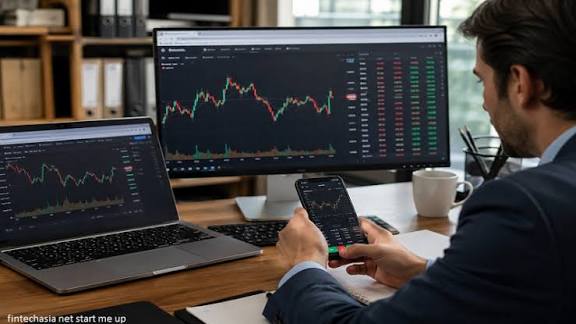
Access to timely information has become central to digital trading. Modern financial systems can collect market prices, transaction volumes, economic indicators, company announcements, and other information through digital data feeds. Analytical dashboards then transform this information into charts, indicators, alerts, and reports that users can review.
Data analytics can help traders organize large amounts of information that would otherwise be difficult to interpret manually. Multi-timeframe charts, historical comparisons, volatility measurements, and performance reports are examples of analytical tools commonly associated with modern trading platforms. Some recent online coverage connected with FTAsiaTrading discusses enhanced analytics, charting functions, and performance reporting, although individual platform claims should be independently verified before being treated as established facts.
Cloud Computing and Scalable Infrastructure
Cloud computing has changed how financial technology systems are built and maintained. Instead of relying entirely on physical servers located within one organization, cloud infrastructure allows applications and data-processing resources to operate through scalable computing environments. This can help businesses adjust computing capacity according to demand.
For financial technology providers, scalability can be particularly important when large numbers of users access a service simultaneously. Cloud infrastructure can support databases, analytics applications, customer interfaces, backup systems, and development environments. However, cloud adoption also requires strong access controls, encryption, monitoring, backup strategies, and regulatory considerations. Technology becomes valuable only when reliability and security are designed into the system from the beginning.
Cybersecurity in Digital Trading
As financial activity becomes increasingly digital, cybersecurity becomes a fundamental requirement. Trading accounts and financial applications can contain sensitive personal, transactional, and authentication information. Unauthorized access can create significant operational and financial problems.
Modern cybersecurity practices can include multi-factor authentication, encryption, secure API management, access controls, suspicious-activity monitoring, and regular software updates. API security is especially important for automated trading because connected applications may have permission to access account information or perform specific actions. Some online material discussing FTAsiaTrading technology mentions multi-factor authentication and granular API permissions, but such platform-specific claims should be checked against authoritative documentation before relying on them.
Blockchain and Digital Financial Systems
Blockchain is another technology frequently discussed in connection with fintech. A blockchain can maintain a distributed record of transactions through a network rather than depending exclusively on one centralized database. Its applications can extend beyond cryptocurrencies to areas such as transaction verification, tokenization, digital identity, and settlement infrastructure.
The potential advantage of blockchain depends heavily on the particular use case. Not every financial process requires distributed ledger technology, and blockchain systems can involve challenges related to scalability, governance, privacy, interoperability, and regulation. Understanding these limitations is essential when evaluating claims about blockchain-based financial products. Within discussions surrounding ftasiatrading technology, blockchain is often presented alongside other emerging technologies, but individual implementation claims should be evaluated separately from the general capabilities of blockchain.
Mobile Technology and Digital Access
Smartphones have changed how people interact with financial services. Mobile applications can provide access to market information, account dashboards, alerts, charts, and transaction interfaces from almost anywhere with an internet connection. This convenience has made mobile design an important part of financial technology.
Good mobile financial applications generally prioritize clear navigation, secure authentication, understandable information displays, and reliable notifications. However, convenience can also encourage users to make decisions too quickly. A mobile interface may make trading feel simple even when the underlying financial decision is complex. Technology should therefore make information clearer without creating the impression that financial markets are effortless or predictable.
The Importance of Data Quality
Advanced technology is only as useful as the information it processes. Poor-quality data can create inaccurate analytics, misleading signals, and operational problems. Financial technology companies therefore need systems that validate, clean, update, and protect their datasets.
Data quality involves several factors, including accuracy, completeness, consistency, timeliness, and appropriate formatting. Historical datasets also need careful examination because missing information or survivorship bias can distort analytical conclusions. When evaluating ftasiatrading technology, users should therefore look beyond attractive descriptions of artificial intelligence or automation and ask what data powers the system, how frequently it is updated, and how analytical results are validated.
Technology and Risk Management
Technology can support risk management, but it cannot remove market risk. Automated alerts can notify users when prices move beyond specified levels. Analytical dashboards can display exposure and performance. Software can monitor transactions for unusual patterns and help organizations maintain operational controls.
Nevertheless, risk management requires appropriate human oversight. A sophisticated system can still behave unexpectedly if its assumptions are incorrect. Businesses should establish limits, testing procedures, access controls, contingency plans, and monitoring processes around critical financial technology. This balanced approach helps ensure that automation remains a controlled tool rather than becoming an unmanaged source of additional risk.
The Future of Digital Trading Technology
The future of financial technology is likely to involve greater integration between artificial intelligence, cloud computing, real-time analytics, cybersecurity, automation, and potentially blockchain-based infrastructure. Rather than operating as completely separate technologies, these systems increasingly work together within broader digital ecosystems.
AI may help organize and interpret information, cloud infrastructure can provide scalable computing resources, cybersecurity protects digital environments, and automation can handle repetitive processes. At the same time, regulatory requirements and consumer expectations will continue influencing how these technologies are developed. Recent online discussions of ftasiatrading technology similarly emphasize the relationship between emerging technology and modern financial markets.
The most meaningful progress will likely come from practical applications that solve identifiable problems rather than from technology used simply because it is fashionable. Financial businesses need systems that are reliable, transparent, secure, and understandable. Users also benefit when technology provides clear information about costs, limitations, data sources, and potential risks.
Conclusion
Technology has become an essential part of modern financial markets, influencing everything from data analysis and automation to cybersecurity and mobile access. Ftasiatrading technology is a phrase used online within this broader discussion of digital trading and fintech innovation, but the different descriptions available online mean that individual platform claims should be checked carefully rather than accepted automatically.
The future of trading technology will depend on more than faster software or increasingly sophisticated algorithms. Strong data quality, secure infrastructure, responsible automation, transparent processes, and effective risk management will remain equally important. As financial technology continues developing, understanding what a system actually does—and separating documented capabilities from promotional or unverified claims—will help readers develop a more informed view of the digital trading landscape.