

Introduction
Financial technology continues to reshape the way people, businesses, financial institutions, and traders interact with digital markets. Faster payment systems, artificial intelligence, automated analytics, tokenization, cybersecurity, and cloud-based infrastructure are becoming important parts of the modern financial ecosystem. In this environment, ftasiatrading technology news by fintechasia provides a useful topic for understanding how technology and trading are increasingly connected. Current coverage around financial technology highlights developments in areas such as artificial intelligence, digital payments, trading infrastructure, cybersecurity, and blockchain-based financial services.
The technology story is no longer limited to cryptocurrency exchanges or traditional online trading platforms. Financial companies are investing in infrastructure that can process larger volumes of information, improve transaction speed, strengthen security, and provide users with more sophisticated analytical tools. At the same time, regulators are paying greater attention to digital assets, automated decision-making, privacy, and operational resilience. This combination of innovation and oversight is creating a financial technology environment in which businesses need to consider both opportunity and responsible implementation.
The Growing Role of Technology in Modern Finance
Technology has changed financial markets from relatively manual environments into highly connected digital ecosystems. Traders can access market information through mobile devices, businesses can accept digital payments from customers around the world, and financial institutions can use automated systems to analyze enormous quantities of data. Cloud computing and application programming interfaces have also made it easier for financial services to connect different platforms.
ftasiatrading technology news by fintechasia can be viewed within this wider transformation. Technology updates involving trading engines, analytics, security systems, APIs, and digital finance tools demonstrate how financial platforms are increasingly dependent on sophisticated software infrastructure. Recent coverage associated with FTAsiaTrading discusses areas such as faster matching systems, advanced order types, analytics, and API improvements.
This transformation also changes expectations. Users increasingly expect financial applications to provide fast responses, transparent information, strong account protection, and convenient mobile experiences. Financial technology companies therefore have to improve not only their visible features but also the infrastructure operating behind those features.
Artificial Intelligence and Financial Technology
Artificial intelligence is one of the most significant technology themes affecting financial services. Machine learning systems can analyze large datasets, identify patterns, detect unusual activity, and assist with forecasting. Financial organizations are exploring AI for fraud detection, customer service, credit assessment, risk analysis, market research, and operational automation.
Within ftasiatrading technology news by fintechasia, AI-related developments can be considered part of a broader movement toward data-driven trading and financial analysis. AI tools may help traders organize information and identify potential patterns, but their outputs still require appropriate testing and human oversight. A model that performs well under one market condition may behave differently when volatility, liquidity, or market structure changes.
The growing use of AI also creates new responsibilities. Financial firms need to consider data quality, model monitoring, cybersecurity, transparency, and the possibility of inaccurate automated outputs. Instead of treating AI as a replacement for every financial decision, organizations are increasingly examining how automated systems can complement established analytical and risk-management processes.
Faster Trading Infrastructure
Speed has always mattered in electronic markets, but modern technology has increased the importance of reliable and efficient infrastructure. Matching engines, network architecture, APIs, and order-management systems determine how quickly information and instructions move through a platform.
One area discussed in ftasiatrading technology news by fintechasia is the development of faster matching infrastructure and more advanced order functionality. These changes can influence how traders manage entries, exits, execution strategies, and larger orders. Advanced order types such as conditional orders and time-based execution can give users additional ways to structure transactions.
However, greater speed does not automatically mean better results. Faster systems can increase the importance of testing, monitoring, and risk controls. Automated strategies need safeguards against unexpected market movements, technical failures, incorrect parameters, and connectivity problems. As trading infrastructure becomes more sophisticated, operational discipline becomes equally important.
Digital Payments and the Evolution of Finance
Digital payments are another major area where technology is changing financial behavior. Mobile wallets, real-time payment networks, QR payments, and integrated payment platforms are expanding the ways consumers and businesses transfer money. Across Asia, the development of digital payment infrastructure is particularly important because large populations increasingly use mobile-first financial services.
The wider fintech environment described by FinTechAsia includes payments, lending, wealth technology, digital assets, and insurance technology as important areas of innovation.
These developments are connected to trading technology because the same underlying principles—speed, connectivity, security, automation, and data management—are relevant across financial services. A modern financial platform may combine payment functionality, investment services, analytics, identity verification, and automated reporting within a single digital ecosystem.
Blockchain and Tokenized Financial Assets
Blockchain technology continues to influence discussions around financial infrastructure. Instead of focusing only on cryptocurrencies, financial institutions are increasingly examining tokenization, where traditional financial assets or financial claims can be represented digitally on distributed ledgers.
A significant recent development illustrates this direction. In September 2026, the European Central Bank launched its Pontes platform for wholesale digital-euro transactions, allowing banks to settle tokenized transactions recorded on privately operated distributed ledgers using central bank money.
This type of development demonstrates why blockchain technology remains relevant to financial technology discussions. Tokenization could potentially change how certain securities, payments, and settlement processes operate. However, adoption depends on regulation, interoperability, security, liquidity, and the ability of different systems to communicate effectively.
For traders and technology professionals, the important issue is not simply whether blockchain is popular. The more useful question is how distributed infrastructure can solve specific problems while maintaining appropriate controls.
Cybersecurity Becomes a Core Financial Priority
As financial services become more digital, cybersecurity becomes increasingly important. Trading accounts, payment systems, APIs, customer databases, and digital wallets all represent valuable targets for attackers. A security failure can cause financial losses while also damaging customer confidence.
ftasiatrading technology news by fintechasia discusses security-related improvements such as multi-factor authentication, stronger session management, and more granular API permissions. These controls are particularly relevant for users who connect automated trading software to financial platforms.
API security deserves particular attention because automated systems may have permission to access accounts without requiring constant human interaction. Restricting API permissions, rotating credentials, monitoring activity, and avoiding unnecessary access can reduce potential exposure. Financial platforms also need strong internal security practices, including access controls, monitoring, encryption, incident response, and regular testing.
Data Analytics and Better Decision-Making
Data has become one of the most valuable resources in financial technology. Modern platforms can collect information about transactions, market movements, user behavior, liquidity, volatility, and operational performance. Analytics tools can transform this information into dashboards and reports that help users understand complex activity.
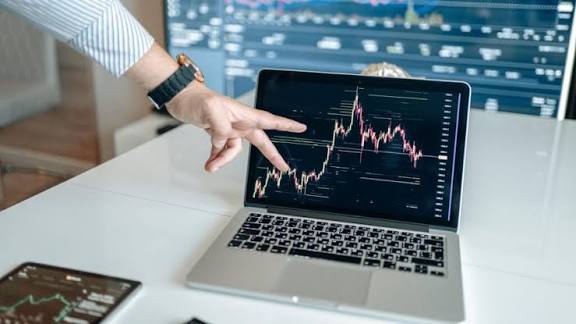
The technology developments covered under ftasiatrading technology news by fintechasia include enhanced charting and analytics capabilities, such as multi-timeframe indicators, performance reporting, and market visualization tools.
The value of analytics depends heavily on interpretation. A chart can reveal historical patterns, but historical information does not guarantee future outcomes. Similarly, an automated signal can support research without eliminating uncertainty. Good financial technology therefore combines data availability with appropriate context, testing, and risk management.
Regulation and Responsible Innovation
Innovation in financial technology does not happen independently of regulation. Governments and financial authorities are increasingly developing frameworks covering digital assets, consumer protection, cybersecurity, payments, data privacy, and financial reporting.
The regulatory environment can vary significantly between Asian markets. FinTechAsia’s broader coverage notes that financial companies operating across different countries need to account for local rules and may use phased launches or regulatory sandbox approaches when introducing new products.
This makes compliance technology increasingly important. Automated reporting, audit trails, identity verification, transaction monitoring, and record management can help organizations meet regulatory requirements. Companies that build compliance considerations into their technology from the beginning may find it easier to scale across different markets.
Operational Resilience and Platform Reliability
A sophisticated financial platform must remain dependable even when unexpected problems occur. Network interruptions, software bugs, cyberattacks, infrastructure failures, and unexpected traffic can affect financial services.
ftasiatrading technology news by fintechasia also highlights platform reliability, uptime reporting, maintenance planning, redundancy, and failover procedures. These elements may not receive as much attention as new features, but they are essential for users who depend on financial platforms.
Operational resilience involves more than maintaining servers. Organizations need backup systems, recovery procedures, monitoring tools, incident-response plans, and regular testing. Automated trading systems also need appropriate reconnection and order-state procedures so that technical interruptions do not create unintended transactions.
The Asian Fintech Technology Landscape
Asia remains an important environment for financial technology innovation because of its large digital consumer base, rapidly developing payment systems, established financial centers, and growing technology sector. India, Singapore, Japan, Hong Kong, China, and Southeast Asian markets each have distinctive financial technology ecosystems.
Recent FinTechAsia coverage describes developments involving AI underwriting, embedded finance, tokenization, digital payments, wealth technology, and insurance technology. These developments show that fintech innovation is occurring across multiple financial sectors rather than being concentrated in one area.
For businesses, this creates opportunities to develop localized financial products while maintaining international technology standards. For technology providers, it also creates demand for interoperable systems capable of working with different currencies, regulations, payment networks, and customer requirements.
What the Future Could Bring
The next phase of financial technology is likely to involve greater integration between AI, cloud infrastructure, blockchain, payments, analytics, and cybersecurity. Rather than operating as isolated technologies, these systems can increasingly work together.
For example, AI can support analytics, cloud infrastructure can provide scalable computing capacity, APIs can connect different services, and blockchain-based systems can support selected tokenization or settlement applications. At the same time, security and regulatory controls can operate across the entire technology stack.
The future discussed through ftasiatrading technology news by fintechasia therefore extends beyond individual platform updates. It reflects a larger transition toward interconnected digital financial infrastructure. Companies that want to participate in this environment will need to evaluate technology based on reliability, security, usability, scalability, compliance, and measurable business value.
Conclusion
Financial technology is entering a period in which innovation and infrastructure are becoming equally important. Faster trading systems, artificial intelligence, advanced analytics, digital payments, tokenization, cybersecurity, and regulatory technology are all contributing to the evolution of financial services. ftasiatrading technology news by fintechasia offers a useful subject for examining these changes and understanding how technology can influence modern trading and digital finance.
The most important development is not simply the introduction of another feature or platform upgrade. It is the gradual creation of financial ecosystems that are faster, more connected, increasingly automated, and more dependent on secure digital infrastructure. As these systems continue to develop, businesses and users will need to balance innovation with testing, security, compliance, and responsible decision-making. That balance will remain central to the future of fintech and technology-driven financial markets.